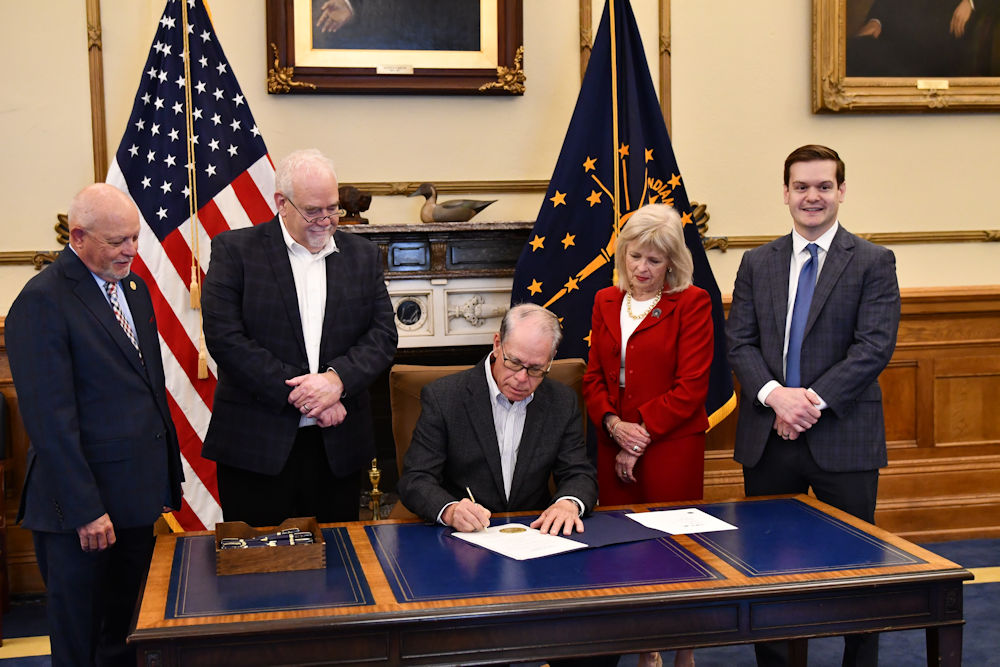
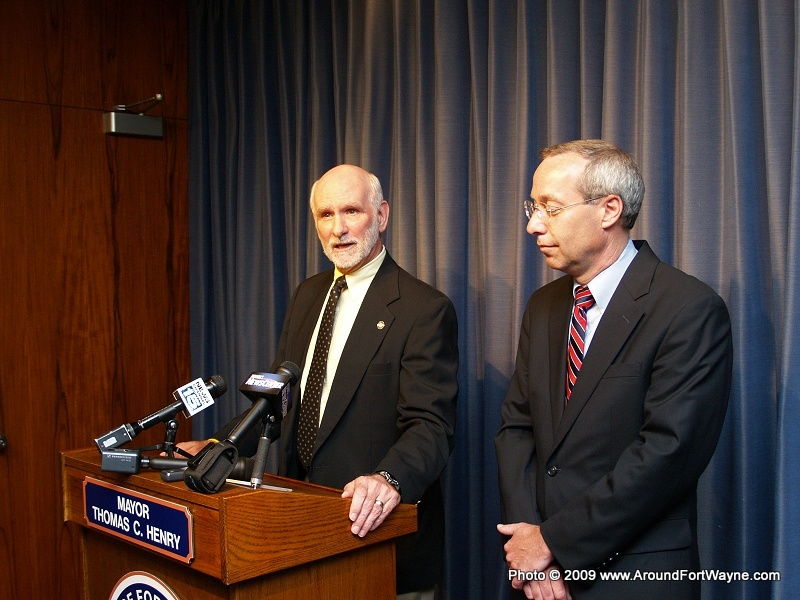
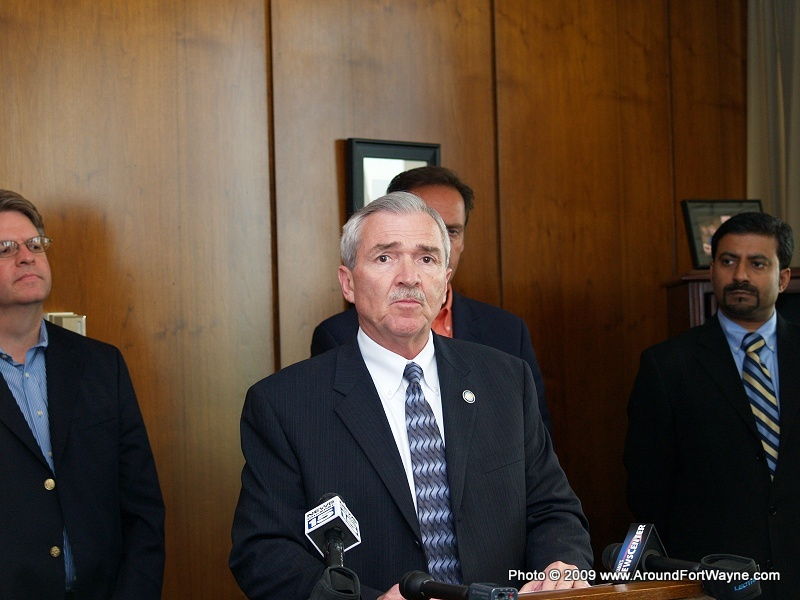
Indiana Governor Mike Braun signs HEA 1360 on April 14, 2026. From L to R: Indiana Representatives Doug Miller and Matt Lehman, Governor Braun (seated), Indiana Senator Liz Brown, and Allen County Director of Government Affairs John Wilson. Courtesy photo.
Yesterday, Indiana Governor Mike Braun hosted a ceremonial signing of a locally-drafted bill that will help mitigate the workload for local government employees across the state.
News release from the Allen County Board of Commissioners:
Access to Public Records Act Bill Originated in Allen County
Allen County, Indiana (April 15, 2026) – Yesterday, Governor Mike Braun hosted a ceremonial signing of a locally-drafted bill that will help mitigate the workload for local government employees across the state.
Braun signed HEA1360, a bill that allows a public agency to discern whether an Access to Public Records Act (APRA) request comes from a human or an Artificial Intelligence program. It also allows records release staff to prioritize public record requests that are submitted by Indiana residents and requests that are submitted for civic, journalistic, academic, or personal use in front of requests by national data mining firms.
John Wilson, Allen County Director of Government Affairs, drafted the bill and worked with elected officials to get it passed, which officially happened in March 2026 and will go into effect on July 1, 2026. The bill was carried by Representative Matt Lehman (HD-79) in the House and by Senator Liz Brown (SD-15) in the Senate; it was also co-authored by Representatives Martin Carbaugh (HD-81), Doug Miller (HD-48), and Gregory Porter (HD-96). The bill passed unanimously at every stage of the process and had bipartisan support.
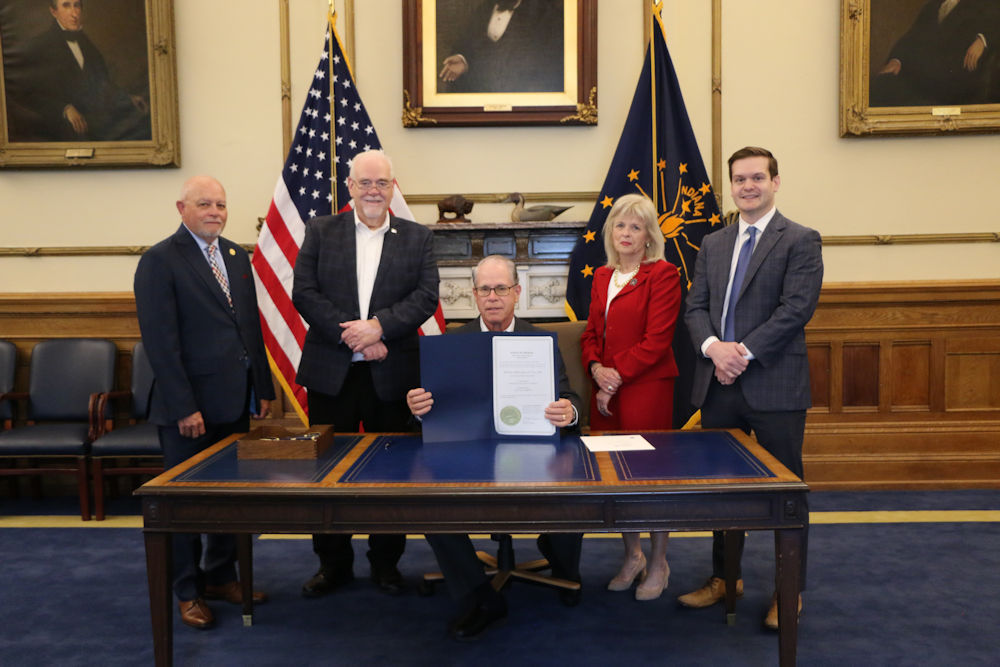
Indiana Governor Mike Braun poses with HEA 1360 on April 14, 2026. From L to R: Indiana Representatives Doug Miller and Matt Lehman, Governor Braun (seated), Indiana Senator Liz Brown, and Allen County Director of Government Affairs John Wilson. Courtesy photo.
The Allen County Commissioners shared that, “John identified an emerging problem after hearing multiple internal reports from staff in our records release department. In the last two years, there has been a growing trend in bulk public records requests that seemed suspiciously non-human; he then confirmed this with other Counties around the State that these requests (many times for sensitive information) were accumulating.” The bill establishes a process to anticipate and deter “data scraping,” a process where criminals try to replicate or imitate the services of a unit of government to seem legitimate.
Wilson explained why the bill is so important, “By allowing units of government to deny and subsequently report suspicious requests to the State, especially those from fake companies or fake names, Allen County can now prioritize legitimate records requests from residents and the media. This also helps County employees across the State stay on the tasks they were hired for initially, instead of hours on bulk requests from suspicious entities, which helps improve local government efficiency. Lastly, it provides a new, yet relatively small, source of revenue for State and County governments in Indiana to reduce diversion drag from requests.”
He continued, “County government is organized under and completely adherent to State Code as determined by the General Assembly. This is another great example of Allen County identifying a growing problem, working on a solution, and providing it to the State so that residents and citizens can be better served. This is local government in action.”